Tree Safety Guide
Does Your Tree Need to Be Removed?
By Jordan Hale
Not every unhealthy tree needs to come down—but some become a serious safety risk if they're left alone.
If you've noticed dead branches, a tree leaning more than it used to, or damage after a storm, it's worth taking a closer look. This guide covers common warning signs and when tree removal may be the safest option.
If you're still unsure, our crew can evaluate the tree—or browse other Learning Center guides for cost, species, and pruning timing.
Warning Signs Your Tree May Need to Be Removed
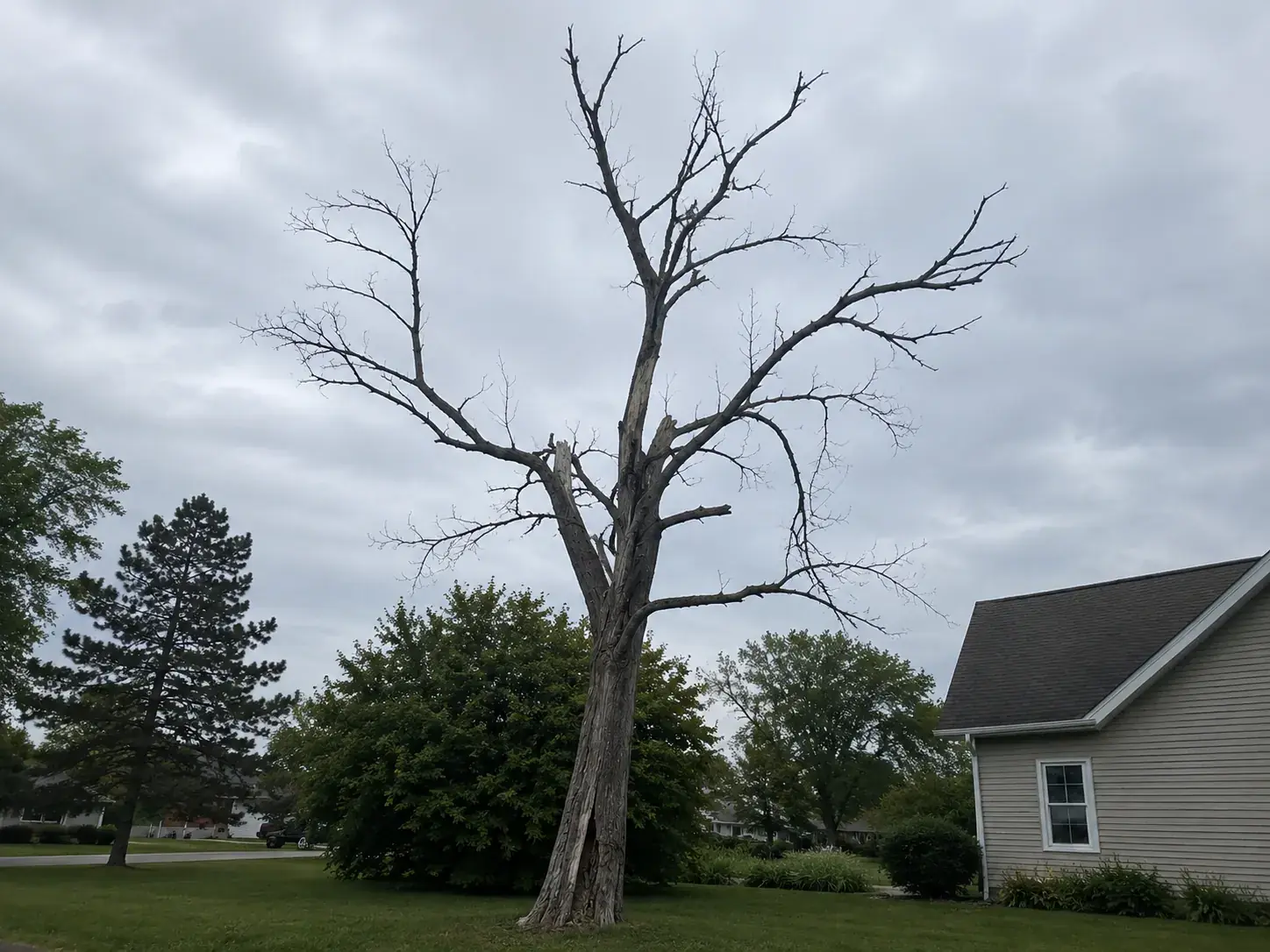
While every tree is different, these are some of the most common reasons homeowners throughout Metro Atlanta contact us for arborist services or removal.
Large Dead Branches
A few small dead limbs aren't always a concern, but multiple large dead branches can indicate decline. Selective tree trimming and pruning sometimes solves it before removal is required.
The Tree Is Leaning
Many trees naturally grow with a slight lean. However, if a tree suddenly begins leaning or the angle continues to increase, the root system may have become unstable.
Decay Around the Base
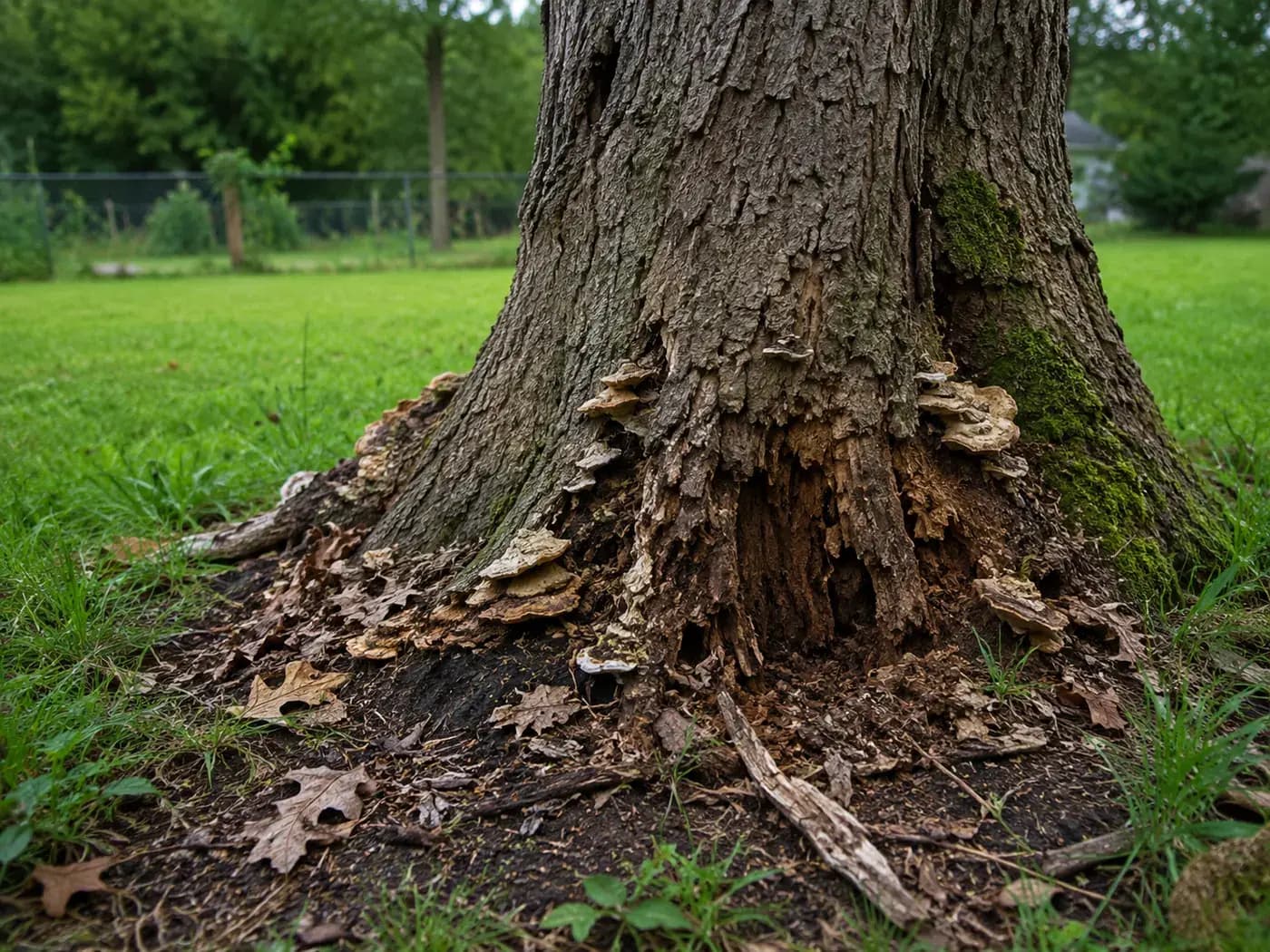
Soft wood, cavities, fungal growth, or mushrooms around the trunk can be signs of internal decay that weakens the tree's structure.
Dead or Sparse Canopy
If much of the tree fails to leaf out during the growing season while nearby trees are healthy, it may be declining. Knowing the species helps—see common trees in Metro Atlanta.
Storm Damage
Broken trunks, split limbs, hanging branches, or exposed roots after severe weather can make a tree unsafe—even if it still looks alive. Call emergency tree service when the hazard is immediate.
It's Too Close to Your Home
Trees don't always need to be removed because they're unhealthy. Sometimes they're simply growing too close to a roof, foundation, driveway, or utility lines. Clearance pruning may buy time; otherwise tree removal is cleaner long-term.
Can the Tree Be Saved Instead?
Not always.
In many cases, professional pruning, cabling, or routine tree care can solve the problem without removing the entire tree.
A professional evaluation can determine whether removal is truly necessary. If cost is the next question, read how much tree removal costs in Atlanta.
Don't Ignore the Warning Signs
Trees often give homeowners plenty of warning before they fail.
If something about your tree doesn't look right, it's usually worth having it evaluated before it becomes an emergency.
Addressing a problem early is often safer, less stressful, and can help prevent costly property damage across our service areas.
Frequently Asked Questions
Does every dead tree need to be removed?
Not necessarily. Some dead trees can remain standing safely for a period of time, while others become hazardous very quickly depending on their size, location, and condition.
Can a leaning tree be saved?
Sometimes. A gradual natural lean isn't always a concern, but a tree that suddenly begins leaning should be evaluated as soon as possible.
Should I remove a tree after a storm?
If the tree is cracked, uprooted, leaning, or has large broken limbs, have it inspected before cleanup. Start with emergency tree service when limbs threaten people or structures.
Can trimming solve the problem instead?
Often, yes. Many trees benefit from tree trimming rather than complete removal. Timing tips are in when to trim trees in Georgia.
Keep reading
Related guides & services
Useful next steps from Atlanta TreeWorks across Metro Atlanta.
Not Sure About Your Tree?
You don't have to make that decision alone.
Answer a few questions through our Instant Estimate, upload photos if you'd like, and we'll help you understand whether tree removal—or another solution—may be the right next step.